

None.
What part of Math do you hate with a passion.



I think my brain just overloaded...

stats is worse than calc imo
None.

Quote from Esponeo
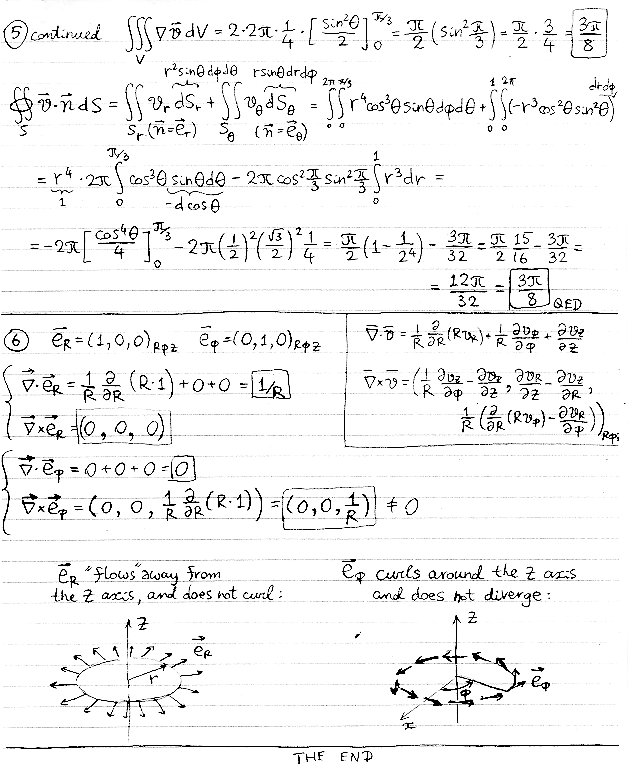
Vector Calculus and solving integrals in three dimensional space defined by a plethora of trigonometric functions.

None.

Quote from Esponeo
Vector Calculus and solving integrals in three dimensional space defined by a plethora of trigonometric functions.
Quote from AntiSleep
stats is worse than calc imo
None.
I was talking about the tedium, and what makes you think I am in high school?
None.

Quote
Oooh, fun stuff but I haven't gotten up to that stage yet. For my major, we don't need to take Vector Calculus, it's mainly for the more dynamic involved majors like Aerospace Engineering.
None.

Quote
I was talking about the tedium, and what makes you think I am in high school?
He seems to assume that everyone that hasn't blatantly stated they are in college or higher are in high school. I think it would be better for him if he stopped assuming that when someone says something that he doesn't agree with that it's because they are less advanced than him. Although, he probably doesn't do this on as broad a scale as I may have made it seem here, it's still an observation I've made in at least a couple examples recently. Maybe the only reason it appeared like this is because he somehow thought AntiSleep said he was in High School at some point.
Quote
Heh highschool calc is nothing compare to what will be coming up once u enter the upper division courses. I thought calc was a cinch until I started taking these upper level courses...
And, wouldn't that make high school stats even easier? I'm relatively positive that stats in high school is damn easy.

None.

Trig.
None.
Alright im sorry for making such assumptions. It's just that I've also taken Statistics in college but personally for me its just that I find it to be easier than this calc that im taking.
None.

Finding the domain and range
I am a Mathematician Computer Scientist Logic user

Set theory and induction.
None.

Quote from AntiSleep
I disagree, repetition is a horrible way to learn things that have an underlying principle, repetition is good for learning factiods, not so much for math. The best way to learn math is constant building, There were things about algebra I forgot until i took calculus, now I doubt I will ever forget them.
Repetition of the underlying concept is good for learning the maths.
None.

Advanced Mathematics is algebra applied to a higher level.
None.
Quote from Syphon
Repetition of the underlying concept is good for learning the maths.
None.

Quote
There is a difference between memorization and understanding. Repetition is good for the former, not the latter.
None.
Quote
No.
How in the world will repitition help your understanding of something?
None.
Depends on how you define "repetition." Repetition of a concept, not necessarily exact copies of equations where only one or two variables are changed in the structure, helps you learn. Like for instance, find the particular solution of this second order linear nonhomogeneous equation:
y"-3y'-4y = 3e^(2t)
to solve this, you would use these steps:
r^2-3r-4=0
r = 4 or -1
y = c_1e^(4t)+c_2e^(-t)+Y(t)
Y(t) = Ae^(2t)
Y'(t) = 2Ae^(2t)
Y"(t) = 4Ae^(2t)
Subsituting back into the original equation..
(4A-6A-4A)e^(2t) = 3e^(2t)
Hence A = -1/2 thus the solution is:
y = c_1e^(4t)+c_2e^(-t)-1/2e^(2t)
So after solving that and not doing anymore problems like this, can you therefore say that you know how to solve second order nonhomogeneous equations? No you can't, because depending on the situation of the equation, you will need to use different steps. If you try doing exactly what we did in the previous question for this one:
y"-3y'-4y = -8(e^t)cos2t
they look the same, but you can't exactly use the same series of steps to solve it. Instead you use these series of steps to find the general solution:
r^2-3r-4=0
r = 4 or -1
y = c_1e^(4t)+c_2e^(-t)+Y(t)
Y(t) = A(e^t)cos2t+B(e^t)sin2t
Y'(t) = (A+2B)(e^t)cos2t+(-2A+B)(e^t)sin2t
Y"(t) = (-3A+4B)(e^t)cos2t+(-4A-3B)(e^t)sin2t
substitute these into the original equation, we get:
10A+2B = 8, 2A-10B = 0
Hence A = 10/13 and B = 2/13 so therefore the answer is:
y = c_1e^(4t)+c_2e^(-t)+10/13(e^t)cos2t+2/13(e^t)sin2t
Both are same concept, just each using their own way of solving it. But then there can be some others that vary even more like:
y''+4y = 3csct
where the solution and the steps involved are:
y''+4y = 0
y_c(t) = c_1cos2t+c_2sin2t
y = u_1(t)cos2t+u_2(t)sin2t
y' = -2u_1(t)sin2t+2u_2(t)cos2t+u'_1(t)cos2t+u'_2(t)sin2t
we assume u'_1(t)cos2t+u'_2(t)sin2t = 0 so:
y' = -2u_1(t)sin2t+2u_2(t)cos2t
y" = -4u_1(t)cos2t-4u_2(t)sin2t-2u'_1(t)sin2t+2u'_2(t)cos2t
Then substituting back into the original equation, we get:
-2u'_1(t)sin2t+2u'_2(t)cos2t = 3csct
now using that and our assumption: u'_1(t)cos2t+u'_2(t)sin2t = 0, we get:
u'_1 = -3cost
u'_2 = 3/2csct-3sint
u_1 = -3sint+c_1
u_2 = 3/2ln|csct-cott|+3cost+c_2
now substituting those u's, we get:
y = -3sintcos2t+3/2ln|csct-cott|sin2t+3costsin2t+c_1cos2t+c_2sin2t
and using double-angle formulas, we get:
y = 3sint+3/2ln|csct-cott|sin2t+c_1cos2t+c_2sin2t
Again all are of which are the same concept. If you do alot more of these problems, you learn new methods of knowing how to solve them and more importantly, practical thinking and analytical skills when trying to mix, match, and apply these different methods of solving these equations. This is also a way of constant building; by learning more methods of how to solve these problems and being exposed to more and more different ways of applying methods into solving such equations helps one learn and understand the concept inside out. Repetition in this sense works.
Post has been edited 1 time(s), last time on Oct 8 2007, 4:38 am by MillenniumArmy.
y"-3y'-4y = 3e^(2t)
to solve this, you would use these steps:
r^2-3r-4=0
r = 4 or -1
y = c_1e^(4t)+c_2e^(-t)+Y(t)
Y(t) = Ae^(2t)
Y'(t) = 2Ae^(2t)
Y"(t) = 4Ae^(2t)
Subsituting back into the original equation..
(4A-6A-4A)e^(2t) = 3e^(2t)
Hence A = -1/2 thus the solution is:
y = c_1e^(4t)+c_2e^(-t)-1/2e^(2t)
So after solving that and not doing anymore problems like this, can you therefore say that you know how to solve second order nonhomogeneous equations? No you can't, because depending on the situation of the equation, you will need to use different steps. If you try doing exactly what we did in the previous question for this one:
y"-3y'-4y = -8(e^t)cos2t
they look the same, but you can't exactly use the same series of steps to solve it. Instead you use these series of steps to find the general solution:
r^2-3r-4=0
r = 4 or -1
y = c_1e^(4t)+c_2e^(-t)+Y(t)
Y(t) = A(e^t)cos2t+B(e^t)sin2t
Y'(t) = (A+2B)(e^t)cos2t+(-2A+B)(e^t)sin2t
Y"(t) = (-3A+4B)(e^t)cos2t+(-4A-3B)(e^t)sin2t
substitute these into the original equation, we get:
10A+2B = 8, 2A-10B = 0
Hence A = 10/13 and B = 2/13 so therefore the answer is:
y = c_1e^(4t)+c_2e^(-t)+10/13(e^t)cos2t+2/13(e^t)sin2t
Both are same concept, just each using their own way of solving it. But then there can be some others that vary even more like:
y''+4y = 3csct
where the solution and the steps involved are:
y''+4y = 0
y_c(t) = c_1cos2t+c_2sin2t
y = u_1(t)cos2t+u_2(t)sin2t
y' = -2u_1(t)sin2t+2u_2(t)cos2t+u'_1(t)cos2t+u'_2(t)sin2t
we assume u'_1(t)cos2t+u'_2(t)sin2t = 0 so:
y' = -2u_1(t)sin2t+2u_2(t)cos2t
y" = -4u_1(t)cos2t-4u_2(t)sin2t-2u'_1(t)sin2t+2u'_2(t)cos2t
Then substituting back into the original equation, we get:
-2u'_1(t)sin2t+2u'_2(t)cos2t = 3csct
now using that and our assumption: u'_1(t)cos2t+u'_2(t)sin2t = 0, we get:
u'_1 = -3cost
u'_2 = 3/2csct-3sint
u_1 = -3sint+c_1
u_2 = 3/2ln|csct-cott|+3cost+c_2
now substituting those u's, we get:
y = -3sintcos2t+3/2ln|csct-cott|sin2t+3costsin2t+c_1cos2t+c_2sin2t
and using double-angle formulas, we get:
y = 3sint+3/2ln|csct-cott|sin2t+c_1cos2t+c_2sin2t
Again all are of which are the same concept. If you do alot more of these problems, you learn new methods of knowing how to solve them and more importantly, practical thinking and analytical skills when trying to mix, match, and apply these different methods of solving these equations. This is also a way of constant building; by learning more methods of how to solve these problems and being exposed to more and more different ways of applying methods into solving such equations helps one learn and understand the concept inside out. Repetition in this sense works.
Post has been edited 1 time(s), last time on Oct 8 2007, 4:38 am by MillenniumArmy.
None.

I hate ALL parts of maths with a passion...
None.
Off with your head!
None.

I don't like trig. However, we've recently been introduced to radians, which makes the entire subject A LOT easier. Either way, I still don't like it, mainly because there's so much crap to memorize. It gets even worse with Vector Navigation is physics. There are no concepts. It's all stuff you already know, but need to apply it exactly, with numerous (relatively) complex equations. However, that doesn't mean I don't understand the importance. I do, and I reluctantly do 100% of my homework in it.
I like higher level questions. They're the best way to improve your understanding in a concept.
I like higher level questions. They're the best way to improve your understanding in a concept.
None.
[2026-6-07. : 1:59 am]
 RIVE -- Lots of fun little nods to different works of others in the cheats too.
[2026-6-06. : 5:17 pm]
 Oh_Man -- so i was today years old wen i learned rebel yell starcraft mission is named after a billy idol song. makes me wonder wat other missions are named after songs
[2026-6-01. : 4:03 pm]
IskatuMesk -- no Hello World? No Hello . jpeg? Not even ddosing some government website? smh my head[2026-5-31. : 9:17 pm]
Ultraviolet -- hell yeah. did you have trouble making the button functional, or just haven't gotten there yet?
Members Online: Ultraviolet
Ultraviolet