
| ws-Tank_7 | Apr 18 2008, 11:24 pm | Post #1 |
|
Download: http://www.staredit.net/files/247/
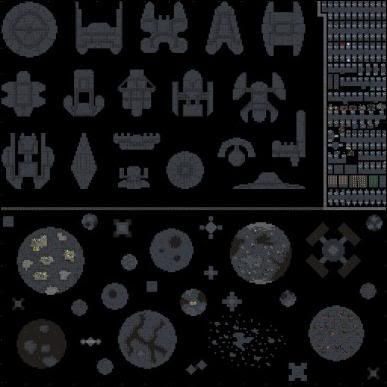
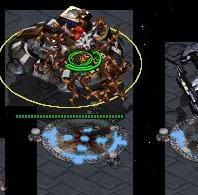
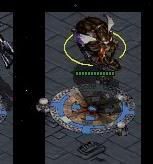
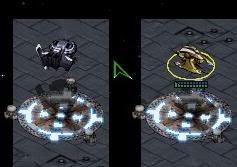
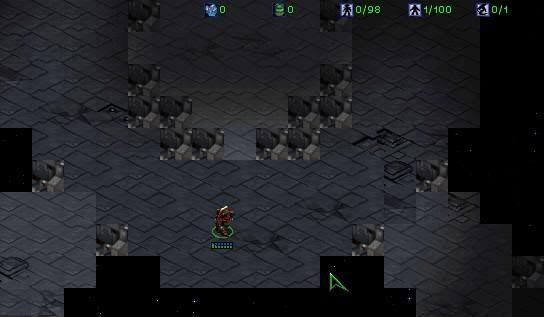
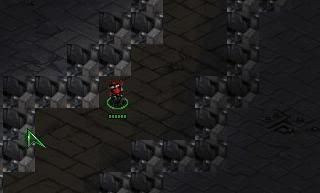
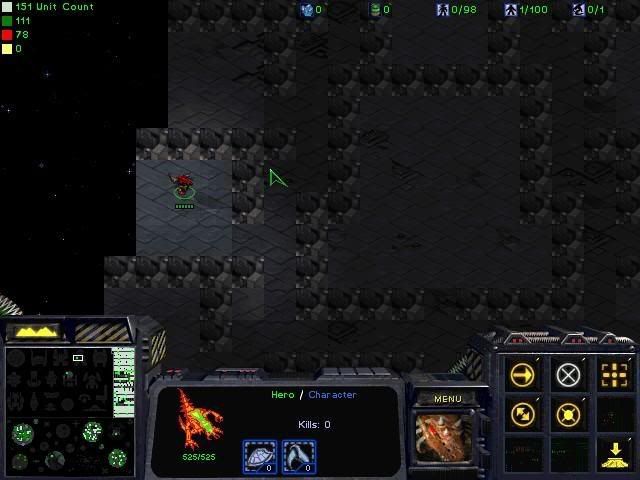
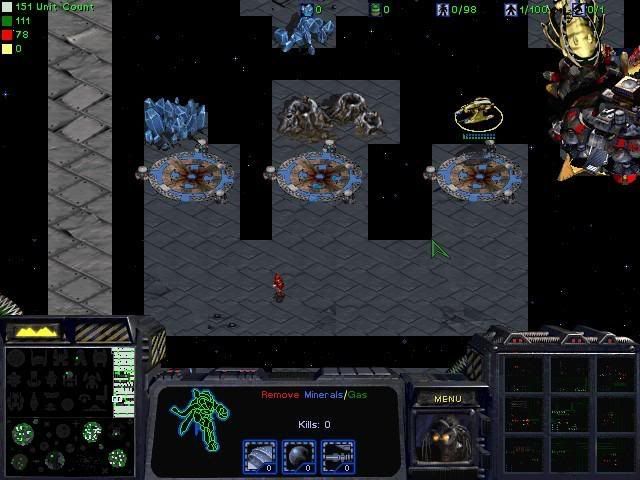
Spaceship RP is much like GERP, Core RP, and Starfire. However, I wanted great variety in choice of ships (both CS's and hulls) as well as to be able to have alot of roleplaying happen inside a ship. Therefore, I dedicated almost half the map to ship hulls! Along with variety of hulls, I made the Infested Command Center, Devourer, Valkrye and Corsair all useable CS's. They are not build-able as regular units. Zerg queen's infest command center ability is disabled. There are 15 CS's to choose from and the only duplicate unit is BC (Norad II and Hyperion). All CS's are infinitely respawnable. ![]() The top left of the map was specifically made for the infested command center CS. ![]() Other ship interiors are meant to be very unique & generic, i.e. there is no "BC hull". Just choose any of the big/medium ones. ![]() I like grid terrain personally, and while some may find it ugly, I did create map details that block vision. This can allow you to roleplay factors such as "line of sight" in a battle involving ground units. The below image is on the big space station shaped platform. You cannot see inside the "central dome" until you walk into it. ![]() The below image of the marine is on one of the planets. The terrain feature can be a canyon or tunnel, though your imagination is the limit. ![]() This image is inside one of the ship hulls. Although I have to admit there are often units on both sides of a wall so it's a bit of a moot point when you have a properly detailed ship interior. ![]() Just thought I'd give a shot of the mineral/vespene spawn & remove beacons. ![]() Other features that you usually see in other RP's include: Ally/Unally for Computer Ally/Unally for Wanderer Invincibility ON/OFF Lights ON/OFF Recycle Unspawnables beacon Give units to player (including Neutral, Computer, and Wanderer) Take units from player (Neutral, Computer, and Wanderer only) Countdown Timer controls Com-sat & Nuke Silo All structures stacked so the tech tree never gets in the way One last thing: Pre-made NPC planets/colonies, inhabitants & some critters! For the lazy roleplayers who don't like to build a whole universe. Download: http://www.staredit.net/files/247/ |
||
|
This post was edited 1 time, last edit by Tank_7: Apr 18 2008, 11:29 pm.
![]() |
| lil-Inferno | Apr 19 2008, 5:19 pm | Post #2 |
|
Don't play with fire, play with lil-Inferno!
|
I love RPing, and this will certainly prove to bring a new experience to it. Good job, again.
|
||
| [Vi3t-X] | Apr 20 2008, 11:13 pm | Post #3 |
|
Espeon Attack!
|
Yum Yum, Steal Map *Downloads*
|
||
![]() ![]() I is supporter. http://s2.darkpirates.com/c.php?uid=140315 Click on it to Give me Monies! (In the game) |
| l)ark_ssj9kevin | Apr 24 2008, 2:06 am | Post #4 |
|
[Project Propaganda]
|
Epic. I like the premade cities.
Here's a tip though; becaons are spaceful. Use Terrain, if possible. |
||
| ws-Tank_7 | Apr 26 2008, 5:22 pm | Post #6 |
|
Yeah I've seen maps where it's just a diferent ground tile color... Personal taste... It bugs me if there's no beacon. I made sure you could spawn alot before hitting CCMU though. |
||
![]() |
| GuN_Solar90 | Apr 26 2008, 11:15 pm | Post #7 |
|
how you ladies doin tonight??
|
Wow, very elaborate attention to detail, I am impressed indeed. The only inherent flaw I saw was that I can't really tell where the starships are on the maps.
Also, I think it would be very original if you added some kind of a bioship, like a Zerg Overlord or something to that sense. Indulge: A bioship is a type of spacecraft described in science fiction. Often they are described as starships. Bioships differ from most spacecraft in that they are predominantly or totally composed of organic or biological components, rather than being constructed from metal or artificial materials. Because of this, they nearly always have a distinctively organic look. Bioships tend to be able to absorb huge amounts of damage, and often can regenerate or heal damaged parts. Some bioships are intelligent or sentient, and some are considered to be lifeforms. It should, perhaps, be added that like most organic beings they are not entirely living in the sense that they contain large amounts of "dead" materials to keep their shape, such as the xylem in trees or bone and chitin in animals. Some kind of sleeper cryogenic ship would also fit well I believe. A sleeper ship is a hypothetical type of manned spaceship in which most or all of the crew spends the journey in some form of hibernation or suspended animation. As there is currently no known technology that allows for long-term suspended animation of humans, the term is usually only found in science fiction. One alternative may be cryogenic freezing of the crew, though that would not be true suspended animation. The most common role of sleeper ships in fiction is for interstellar travel, usually at slower-than-light speed. Travel times for such journeys could reach into the hundreds or thousands of years, making some form of life extension such as suspended animation necessary for the original crew to live to see their destination. Suspended animation is also required on ships which cannot be used as generation ships, for whatever reason. Suspended animation can also be useful to reduce the consumption of life support resources by crewmembers who are not needed during the trip, and for this reason sleeper ships sometimes also make an appearance in the context of purely interplanetary travel. You might find this starcraft subsysem information interesting, additionally. A spacecraft system comprises various subsystems, dependent upon mission profile. Spacecraft subsystems may include: attitude determination and control (variously called ADAC, ADC or ACS), guidance, navigation and control (GNC or GN&C), communications (COMS), command and data handling (CDH or C&DH), power (EPS), thermal control (TCS), propulsion, structures, and payload. Life support Spacecraft intended for human spaceflight must also include a life support system for the crew. Attitude control Spacecraft need an attitude control subsystem to be correctly oriented in space and respond to external torques and forces properly. The attitude control subsystem consists of sensors and actuators, together with controlling algorithms. The attitude control subsystem permits proper pointing for the science objective, sun pointing for power to the solar arrays and earth-pointing for communications. GNC Guidance refers to the calculation of the commands (usually done by the CDH subsystem) needed to steer the spacecraft where it is desired to be. Navigation means determining a spacecraft's orbital elements or position. Control means adjusting the path of the spacecraft to meet mission requirements. On some missions, GNC and Attitude Control are combined into one subsystem of the spacecraft. Command and data handling The CDH subsystem receives commands from the communications subsystem, performs validation and decoding of the commands, and distributes the commands to the appropriate spacecraft subsystems and components. The CDH also receives housekeeping data and science data from the other spacecraft subsystems and components, and packages the data for storage on a solid state recorder or transmission to the ground via the communications subsystem. Other functions of the CDH include maintaining the spacecraft clock and state-of-health monitoring. Power Spacecraft need an electrical power generation and distribution subsystem for powering the various spacecraft subsystems. For spacecraft near the Sun, solar panels are frequently used to generate electrical power. Spacecraft designed to operate in more distant locations, for example Jupiter, might employ a Radioisotope Thermoelectric Generator (RTG) to generate electrical power. Electrical power is sent through power conditioning equipment before it passes through a power distribution unit over an electrical bus to other spacecraft components. Batteries are typically connected to the bus via a battery charge regulator, and the batteries are used to provide electrical power during periods when primary power is not available, for example when a Low Earth Orbit (LEO) spacecraft is eclipsed by the Earth. Thermal control Spacecraft must be engineered to withstand transit through the Earth's atmosphere and the space environment. They must operate in a vacuum with temperatures potentially ranging across hundreds of degrees Celsius as well as (if subject to reentry) in the presence of plasmas. Material requirements are such that either high melting temperature, low density materials such as Be and C-C or (possibly due to the lower thickness requirements despite its high density) W or ablative C-C composites are used. Depending on mission profile, spacecraft may also need to operate on the surface of another planetary body. The thermal control subsystem can be passive, dependent on the selection of materials with specific radiative properties. Active thermal control makes use of electrical heaters and certain actuators such as louvers to control temperature ranges of equipments within specific ranges. A launch vehicle, like this Proton rocket, is typically used to bring a spacecraft to orbit.Propulsion Spacecraft may or may not have a propulsion subsystem, depending upon whether or not the mission profile calls for propulsion. The Swift spacecraft is an example of a spacecraft that does not have a propulsion subsystem. Typically though, LEO spacecraft (for example Terra (EOS AM-1) include a propulsion subsystem for altitude adjustments (called drag make-up maneuvers) and inclination adjustment maneuvers. A propulsion system is also needed for spacecraft that perform momentum management maneuvers. Components of a conventional propulsion subsystem include fuel, tankage, valves, pipes, and thrusters. The TCS interfaces with the propulsion subsystem by monitoring the temperature of those components, and by preheating tanks and thrusters in preparation for a spacecraft maneuver. Structures Spacecraft must be engineered to withstand launch loads imparted by the launch vehicle, and must have a point of attachment for all the other subsystems. Depending upon mission profile, the structural subsystem might need to withstand loads imparted by entry into the atmosphere of another planetary body, and landing on the surface of another planetary body. Payload The payload is dependent upon the mission of the spacecraft, and is typically regarded as the part of the spacecraft "that pays the bills". Typical payloads could include scientific instruments (cameras, telescopes, or particle detectors, for example), cargo, or a human crew. Ground segment The ground segment, though not technically part of the spacecraft, is vital to the operation of the spacecraft. Typical components of a ground segment in use during normal operations include a mission operations facility where the flight operations team conducts the operations of the spacecraft, a data processing and storage facility, ground stations to radiate signals to and receive signals from the spacecraft, and a voice and data communications network to connect all mission elements.[1] Launch vehicle The launch vehicle is used to propel the spacecraft from the Earth's surface, through the atmosphere, and into an orbit, the exact orbit being dependent upon mission configuration. The launch vehicle may be expendable or reusable. |
||
|
This post was edited 1 time, last edit by GuN_Solar90: Apr 26 2008, 11:20 pm.
![]() |
| ws-Tank_7 | Apr 27 2008, 7:39 pm | Post #8 |
|
To answer this I quote my original post about the map: Already done, lol. Hero Overlord is one of the CS's you can choose, and regular overlord is spawnable/buildable. EDIT: If you mean inside the hull, you can spawn some creep colonies and use other zerg buildings as ship details. I've done this on many occasions roleplaying as members of an alien race. |
||
![]() |